
It was one of those days where the cold feels personal. The kind that sharpens the air, stiffens your fingers, and makes you question every decision that led you outdoors without gloves (I have to stop doing that).
By local standards, it was pretty damn cold. By his standards, it was comfortable.
My brother was in Calgary for a conference before heading north, much farther north, on his way to the Arctic. While I was layered up and quietly counting the minutes until I could get back inside, he was just in a shirt, perfectly at ease, like the cold was more of a suggestion than a problem.
That was my first reminder that cold is relative.
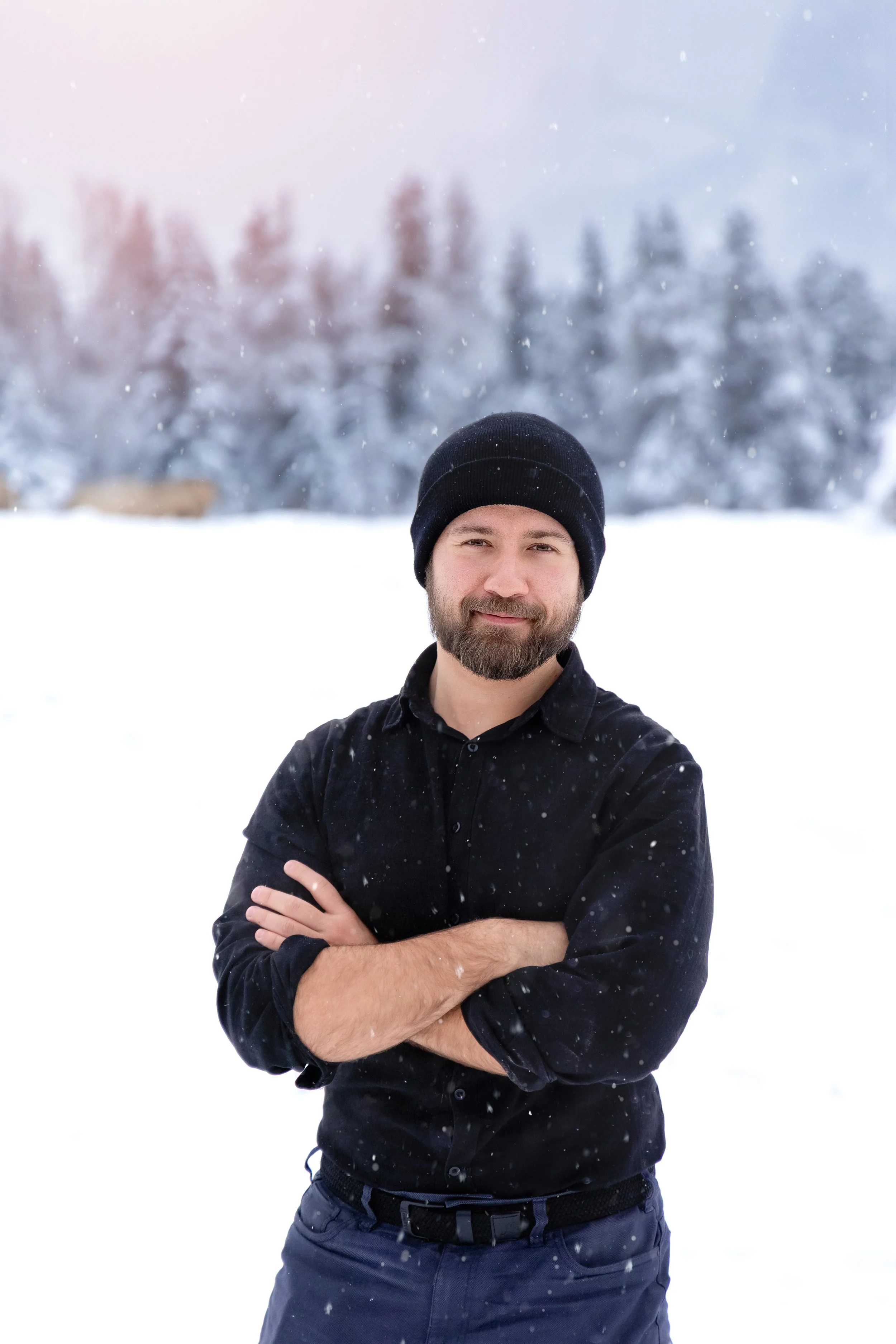
A Different Baseline
When someone spends their time preparing for Arctic fieldwork, their internal temperature scale shifts. What feels extreme to most people barely registers when you know what’s coming next. This was acclimatization, both physical and mental.
The day, and the trip to Calgary during a minus 20 week in December, was simply a warm-up.
He was visiting for a conference where he’s working on a project called Real Ice: Biomimicry to extend the lifespan of Arctic sea ice. The method focuses on pumping seawater onto existing sea ice during winter, accelerating natural freezing processes to increase ice thickness.
From Conference Rooms to Ice Fields
I took him to Lake Minnewanka, and we were lucky enough to spot elk in a field on the drive up!
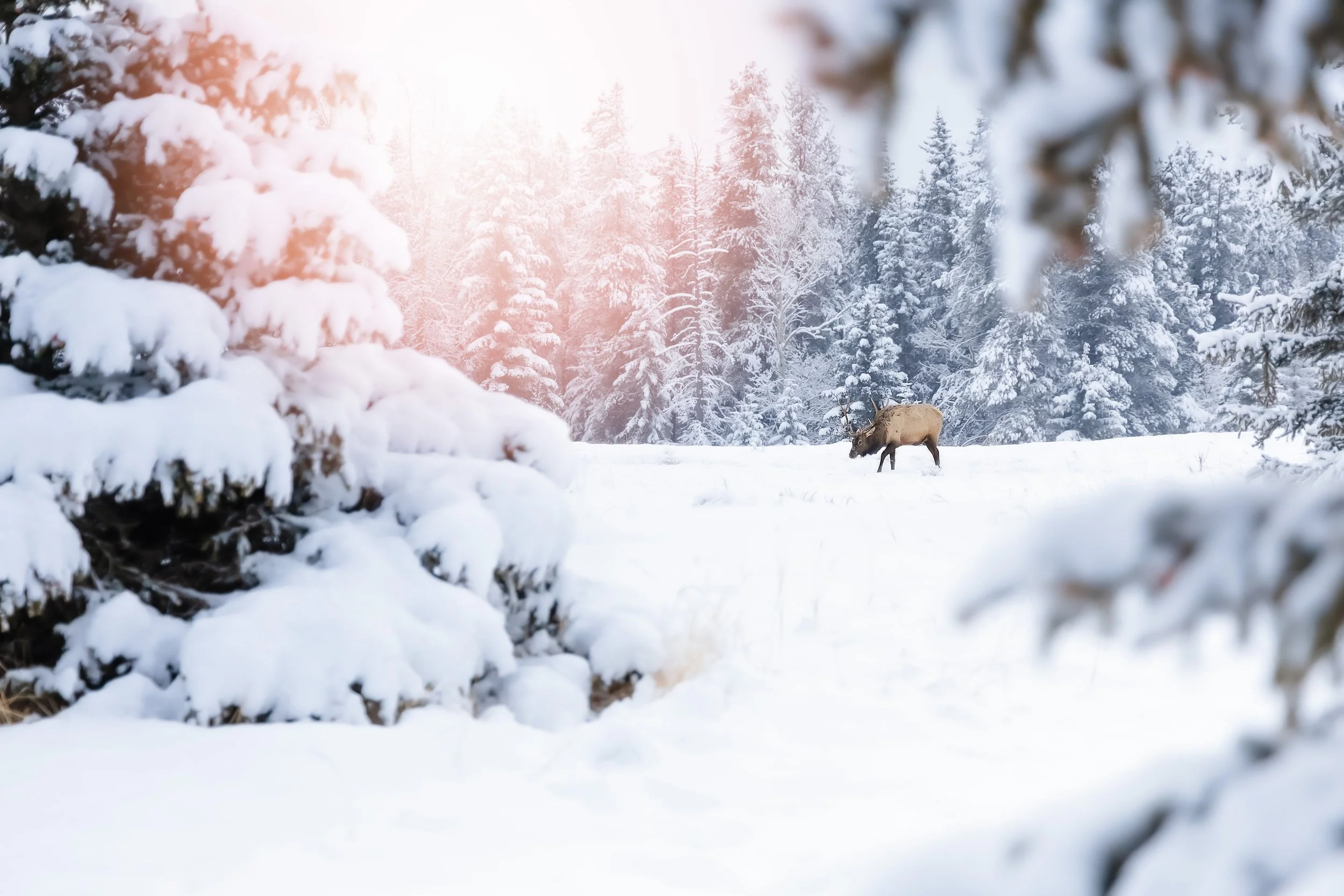
We walked through snow that felt unforgiving, while he talked about research designed for environments far harsher than this one. Conference rooms, presentations, careful explanations of complex systems, all of it leading toward work that cannot be fully understood until you are standing inside it.
Real Ice explores how sea ice naturally forms and persists, and whether those processes can be supported rather than replaced. Instead of artificial fixes, the project looks to biomimicry, working with the physics and chemistry of saline seawater to help ice behave more like it naturally wants to.
The goal isn’t to freeze the Arctic in time, but to extend the lifespan of sea ice, even marginally. In the Arctic, small changes matter. Ice reflects sunlight. Ice stabilizes ecosystems. Ice slows warming feedback loops. When it disappears faster than it should, everything downstream accelerates.
Standing there in what I thought was brutal cold, it was humbling to realize how mild it still was compared to the conditions where these questions actually have to be tested.
For him, cold wasn’t about discomfort. It was measured in survival margins, equipment limits, and whether ice behaves the way models predict when the wind cuts harder and the salt content changes everything.
The Calm Before Colder Things
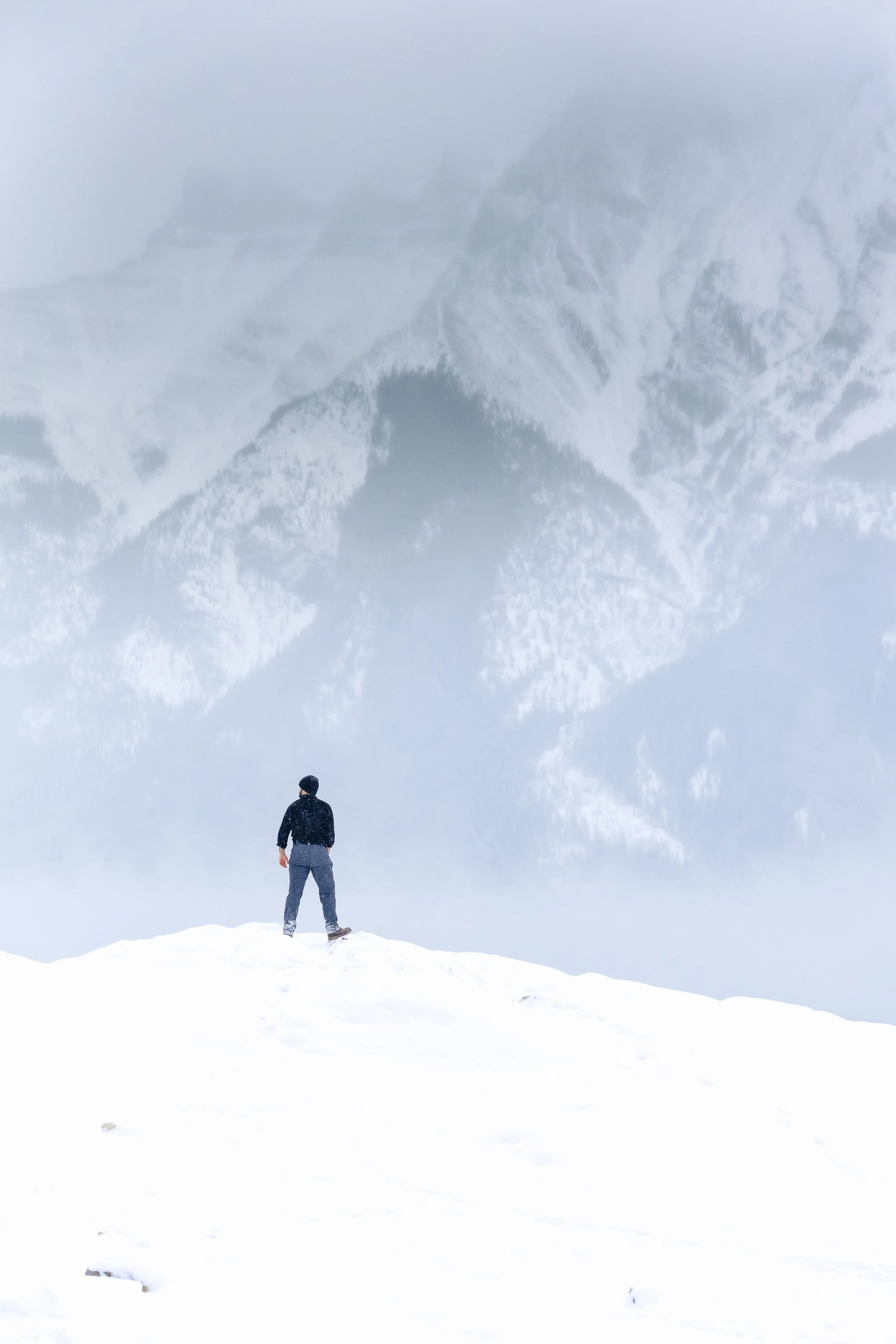
There’s something grounding about seeing someone on the edge of an expedition like that. Still firmly in the everyday world, but already oriented toward somewhere far more extreme. Before the flights, before the gear checks, before the Arctic strips things down to what matters.
That day felt like a pause. A brief overlap between familiarity and distance.
Just snow, cold air, a few crying toddlers, and the realization that what feels severe to us is often only the threshold. Beyond it is a place where ice is not scenery, but structure. Not metaphor, but material. And where understanding it well enough to help it last even a little longer becomes the work itself.
